A House and Its Years
On memory, renovation, and the passing of generations.

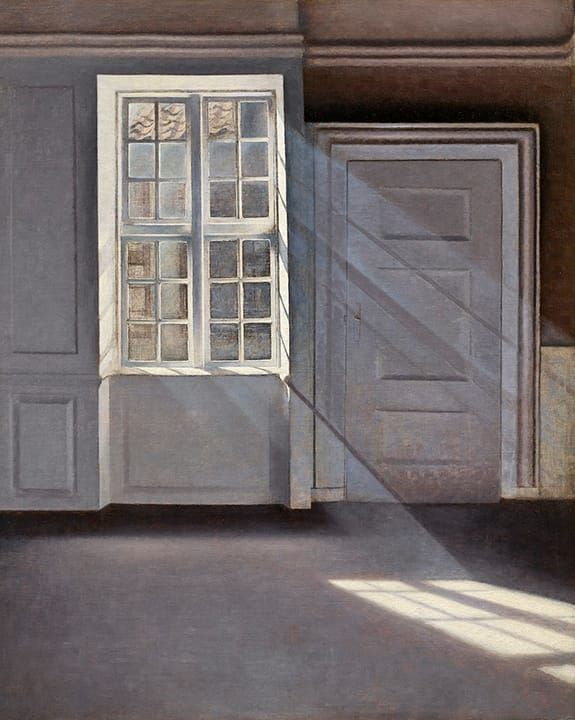
I sit in the window, the sun warming my face, and take in the world before me. It’s stunning.
Magnolias bend in the brisk breeze, and the blossoms of the Bradford pear open in the morning light. In the distance, the soft hum of cars hardly pierces the quiet.
The carpet, worn thin in the paths of years, dampens every step and the paintings hang quietly along the walls. I rise and wander through the house. A door to my right opens into the kitchen.
The old white laminate countertops catch my eye, and above them float beige cabinets worn smooth with age. The walls are dark gray, more modern than the counters and cabinets around them. I turn left and continue into the living room.
Tall windows line the side of the house, letting sunlight spill across the room where dust drifts slowly in the air. To my left a fireplace anchors a circle of chairs, the fabric faded where hands have rested for years. Farther off to the right sits the gathering space—couches, recliners, and a low coffee table worn at the edges.
I pass through a door on the back left of the room and stop at another. When I open it, stairs descend into the basement.
Does the quiet continue down there, or does the house keep its secrets below?
Before stepping down I pause as cooler air rises and brushes my face. I linger, then take a step. And then another. The light dims as I descend and the air cools around me.
Then I notice the walls.
They are covered in photographs.
A series lines up in the order of siblings from oldest to youngest, and beneath them their corresponding baby pictures, the colors fading slightly.
The children in the photographs grow older as the frames continue down the wall. Years pass from one step to the next.
The house above me is quiet now, but the walls here remember something louder.
Suddenly I hear voices. Two people speaking. Before continuing down the stairs I turn and make my way back up.
At the top I close the door and follow the voices down the hall until I find their source. A mother and daughter face one another in a bedroom. I slip quietly inside and sit in the corner of the room. The elderly mother rests in her recliner while the daughter sits across from her on the edge of the bed.
The daughter gestures toward the hallway.
“The kitchen cabinets are forty years old,” she says. “We could replace them and open the space up. New countertops, new floors. The whole house would feel different.”
The mother leans forward, resting a hand along the armrest.
“The cabinets are fine,” she replies. “They only need paint. What the house needs is work underneath. The floors are beginning to sag. The windows are rotting around the edges.”
“But that’s the problem,” the daughter says, now pacing the small room. “Everything is old. We could make this place beautiful again.”
The mother glances toward the hallway.
“It already is.”
“What’s the point of keeping everything the same?” the daughter asks.
“And what’s the point of replacing everything?” the mother replies.
For a moment neither speaks.
The daughter looks toward the doorway as if imagining the rooms beyond it. The mother sits quietly in her chair, her hand resting along the worn armrest.
I watch them and think of the photographs downstairs. The faces in those frames grew older from one picture to the next. Babies became children. Children became adults. Decades passed between one step on the stairs and the next.
The house held each of those moments. And now it holds this one.
I sit quietly and consider speaking.
The daughter looks at the rooms and sees what they might become. The mother looks at the same rooms and remembers what they once were. They are not arguing about cabinets or floors.
They are arguing about time.
One generation builds something and calls it home. The next walks through those same rooms and begins imagining something new.
Innovation or preservation. The question turns in my mind as their voices begin to rise again. I think of the photographs downstairs—the children growing older with each frame, the years passing step by step along the basement wall.
The house held each of those seasons.
It holds this one too.
I lean forward as if to offer my thoughts, but the words never arrive. The daughter glances again toward the hallway and the rooms beyond it. The mother studies the floor between them, her hand resting along the arm of her chair.
Their voices drift through the house and down the hall.
Somewhere beneath us the photographs remain fixed in their quiet rows, the children in them still growing older from frame to frame.
And the house listens as another generation argues about what it should become.
Outside, the magnolias bend in the breeze.