No Longer on Trial
On mirrors, bluebirds, and the exhaustion of self-judgment

Morning routines come in a few varieties. Sometimes they are hurried from an overslept alarm, and sometimes slow from the margin the day allows. But everything else stays much the same. When I wake up, I put on coffee so it will be waiting for me after I finish getting ready. Then I make my way to the bathroom, brush my teeth, comb my hair, put on deodorant, and look in the mirror. But this morning is one of those slow ones, so I linger.
As usual, there are a few strands of hair that never cooperate. I look a bit like Clark Kent as they stray from the rest and curl over my forehead. Below that, I see lines forming on my forehead and wrinkles around my eyes, which rest above a few stray hairs growing above my beard. If my phone were in the room, I would grab it and buy some sort of skincare that promises to prevent aging, but I left it by the bed, and I am too lazy to go back and grab it now, so I stay.
I am starting to wonder if staring at my own reflection was a bad idea. I start looking at my life for proof that I am far enough along. What if I had chosen another career or chosen differently within my current one? Where would I be? Have I made enough money? Would my younger self be proud of who I am? Will my older self look back pleased? The questions grow heavy as a knot forms in my throat. But I come back to the same question I always do when I stare into the mirror. Sometimes I ask it outright, and it lingers in my actions as my day begins. The question pressing down: Will what I see be accepted?
My reflection is hard to look at, so my eyes search for something else and find smudges, dirt, and grime along the edges of the mirror. I can’t remember the last time it was cleaned, but I am stunned to notice it only now. My daily preoccupation must have blinded me, and I could only see myself, not the space where I prepared each morning. What else have I missed?
The mirror has a pretty design. The center is one large pane of glass, the place where I usually inspect myself. The edges are bordered with smaller, symmetric mirrors that form stripes, and the corners consist of square mirrors. Despite the beauty, the mirror also shows its age. I am unsure how it happened, but the bottom right edges have a black void that’s creeping over the mirror. I cannot tell from here if it is chipped or some other substance, but I’m certain time is the culprit.
The scene is ironic. I trust the mirror to be honest in its reflection of me, but the smudges and grime must skew the reflection somehow. Perhaps that’s the cause of my discontent, and the solution is to go into the kitchen, grab my Windex, and tend to the distortions. Then I can finally see the truth, and perhaps I will like what I see!
The bathroom mirror is not the only one I keep. I curate pages of social media, and I comb through pictures that are worthy of other eyes and delete the ones I refuse to let see the light of day. The numbers on my banking app seem to say something deeper than net worth; they begin to resemble worth itself. The approvals and denials that arrive through ignored, forgotten, and delayed texts reflect back more than I care to admit. They seem different, but they flow from the same question: Am I acceptable yet?
It’s not that these things have no voice. My various profiles show the image I choose to curate, the virtues I choose to highlight, and the flaws I allow to make me seem “only human.” A bank account reveals my compensation rather than my worth, and unanswered texts tell me someone has not yet answered rather than whether I am chosen. Somehow I managed to turn everywhere I walk into a courtroom but never questioned the credentials of the judges.
So I move through the day trying to win the narrative. I choose the photo that wins likes, the confession that makes me seem honest without costing too much, and the silence that keeps me from appearing needy. Even vulnerability can become evidence if I arrange it carefully enough. The bank account becomes less a number than a measure. The delayed text becomes less a silence than a sign. Every room is full of people I am trying to convince, even when no one has accused me of anything. This is the strange exhaustion of self-consciousness: it makes defense feel necessary before the trial begins.
For a while, I thought the mirrors were to blame. If somehow I could just silence the bank notifications, cover the bathroom mirror, hide the likes on my latest post, then maybe the critics would cease. The only problem is that the critics change their shape, but the voice remains the same. Even now, I stare at myself; the mirror has no thoughts, views, or opinions. The only voice present is my own, the true source of judgment. I am the problem.
Even that statement holds its usual critical tone, and perhaps that is the root of it. This realization became the latest chapter in my self-accusation.
The cost of self-preoccupation is not self-love, but self-exhaustion.
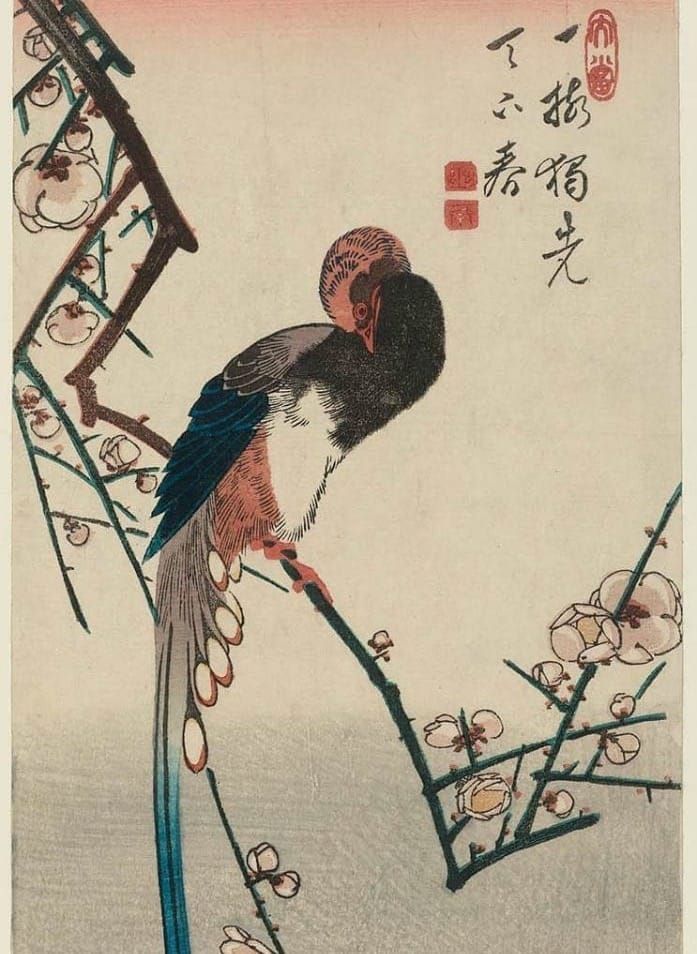
“I am the problem” still sounds like the courtroom. Suddenly I smell the aroma of coffee from the other room. I step out to go pour myself a cup, but I am stopped by the view. Light beams through the windows, flickering off the coffee table, and the coffee pot shimmers in the corner of the room. Just outside, an old wooden fence rises seven feet high, and a bluebird sits along the top. His feathers are a strong, impossible blue against the greens of spring. He dips his head beneath one wing, ruffles himself clean, then lifts his small chest toward the morning. He pays me no mind. He does not know I am watching. He has no part in the trial. And somehow, because of that, the courtroom chatter quiets.
For years I assumed self-awareness was a virtue. I don’t want to become a stranger to myself. There is mercy in being able to name what is happening beneath the surface, but along the way, even that became a mirror. Another place to stand and study myself. Why do I feel this? What does this reveal? Where did this begin? The questions may be honest, but they are not always free. Sometimes they only give the judge better language to use against me.
And maybe that is why the bluebird feels like relief. He does not ask me to explain myself. He does not explain himself either. He sits on the fence, bright and busy in the morning light, concerned with whatever bluebirds are concerned with. For once, nothing in front of me is asking to be interpreted as evidence. The bird can be a bird. The mirror can be a mirror. My face can be my face before it becomes a problem to solve. Maybe presence begins there, when the questions loosen enough for the world to exist without needing to answer for me.
Feeling lighter than before, I walk to the coffee, pour my cup, then return to get ready for the day. I set the coffee down on the dresser outside the bathroom, step in front of the mirror once more, and it seems like a new mirror. The dark mark still gathers in the bottom corner, and the smudges have not been cleaned. Even I look the same: the lines beside my eyes remain, my hair still settles in a way I wish it wouldn’t, and I even see a few new pimples beginning to emerge. Yet the message is kinder than before. The critic inside is no longer projected on the glass, and I see all along the mirror simply showed me what is. I had to stop asking the world to reflect me before I could receive my reflection truthfully.
I will clean the mirror eventually because the glass desperately needs it. But now the reason won’t be the search for a better self. It will be because things are worth tending when they are no longer on trial.