Tomato Man

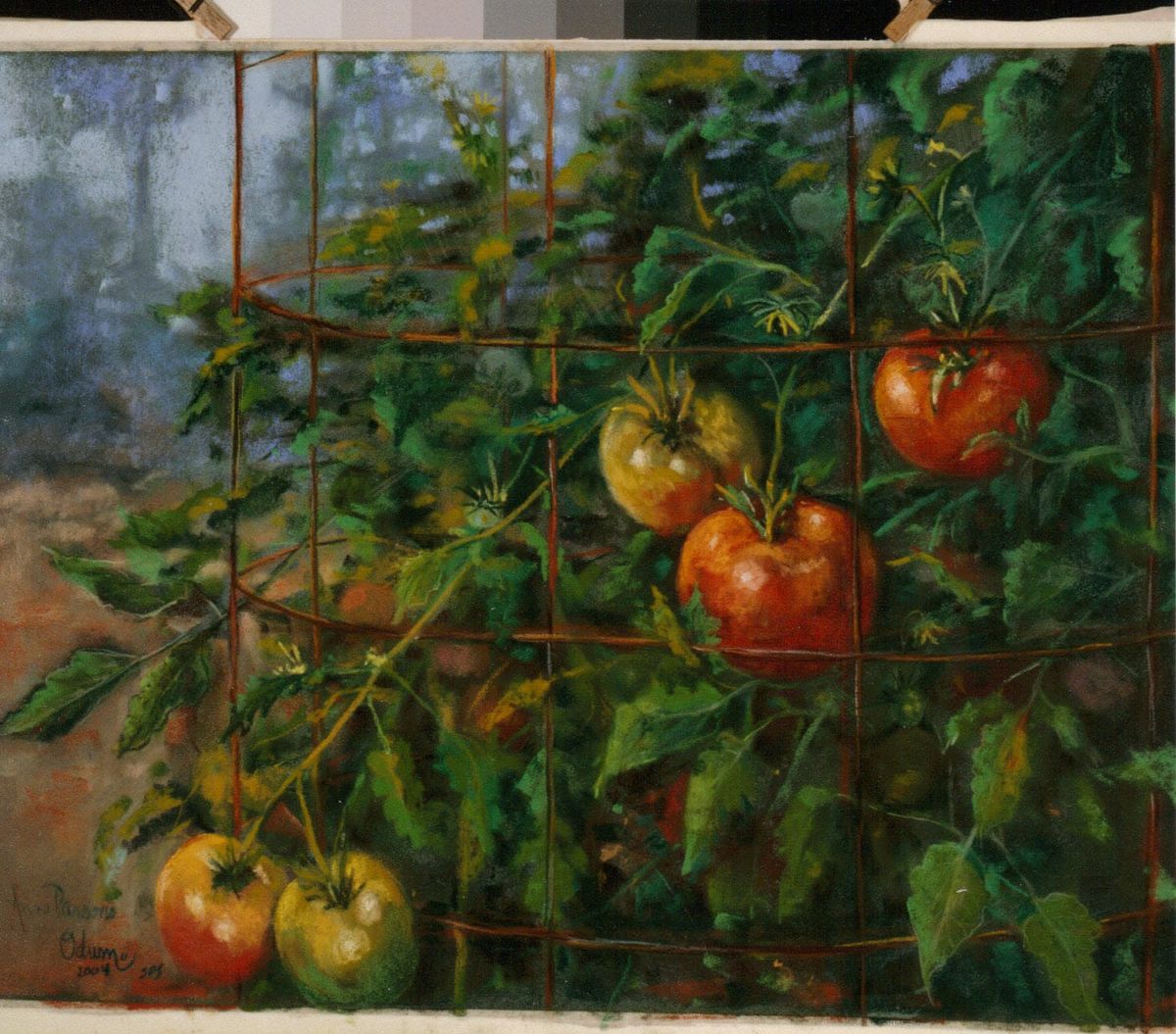
Wally’s Garden
I remember my Grandaddy walking the halls of our church. He walked beside my Grandma, every few steps interrupted by someone stopping to chat. His suit was brown linen, with pleated slacks to match, and the sleeves fell slightly over the hand that gripped a beige plastic grocery bag. You could hear it crinkle as he walked. Through the plastic, red shapes blurred together, heavy enough to pull the bag downward without stretching it too tight. A guest might not have known what he carried, but we did.
They were his tomatoes.
He passed when I was twelve, but I often think about the basket of tomatoes that sat on the kitchen island just inside their house. In the fall, my wife and I moved back home, and every Monday we walk up for movie night with my Grandma. We pass through my uncle’s driveway and into a clearing in the woods. A few steps in, there’s a shed to the right, and just beyond it sits Wally’s Garden, downhill from the house.
After Grandaddy died, my older brother and Dad worked together to keep the garden going. Eventually my brother moved away, so my dad and mom took over. Last year, the lawn service my Grandma hired sprayed weed killer around the garden and contaminated the ground. For the first time since he passed, no tomatoes grew in Wally’s Garden.
In the months after returning, my Grandaddy came up in stories, jokes, and other memories, and every visit we passed his garden. Over time, my wife and I began talking about growing tomatoes there ourselves. We imagined homegrown tomatoes in pasta sauce and how much my Grandma might enjoy seeing another harvest come out of the garden. By January, we had mostly forgotten about it.
My dad placed a few packets of seeds in front of me and asked, “What do we want to plant?” I knew tomatoes were usually red, but I had no idea how many varieties there were. They came big, small, and medium; red, green, orange, and sometimes a mixture of colors. We combed through the packets, moving the ones we liked to the right and the ones we didn’t to the left.
Once we made our selections, my dad seeded them in small round saucers filled with dirt and placed them together on a tray. He poured water into the tray, moved them inside when they had too much sun, and back outside when they needed more. My wife and I mostly strolled past them without much thought. Most never sprouted. Three did. Each had a tiny green stem, barely a centimeter high, curved slightly like a candy cane with a single leaf unfolding from the top.
By the time the weather warmed enough to plant, the garden itself looked nothing like the one I remembered. One night at dinner, my parents reminded me it was time to plant. My job was to till while my mom went to Home Depot for a few more plants. The next day, my dad showed me how to use the tiller and mapped out the plot.
The ground had gone unbroken for a year, and as I prepared the tiller, I worried whether it would still give way. Grass and weeds had crept inward from the edges, leaving only a small patch of bare dirt in the middle. I cranked the old machine and pulled the lever that set the teeth turning. It bounced against the surface, bucking forward and back, until the dirt finally gave way. Then the machine caught and jolted forward, yanking me across the plot. I leaned back slightly against its pull, felt it stabilize, and began shifting my weight forward and back with the machine.
At the end of the first row, I pushed down on the handles, lifting the teeth out of the ground. I shifted my weight left and raised my right hand, pivoting the tiller on its left wheel until it lined up with the next row. I pulled the lever once more and continued the dance. I leaned back against the machine, holding the teeth in place long enough for them to dig deeper and churn the earth beneath.
The tiller struck a piece of coal left behind from one of our fall fires and jumped left, back onto the row I had already finished. My chest tightened and my knuckles went white around the handles. Then I saw what I had hit. I pulled the coal from the dirt, tossed it aside, and kept going.
As I finished the first pass, my mom returned with bags of manure and the rest of our plants. I cut open one of the bags, spread it across the churned earth, and ran the tiller across the plot once more. The ground that had worried me was loose beneath my feet.
The sprouts from our seeds were about an inch high, but the plants my mom brought back were six inches tall, with lush green leaves branching in every direction. Beside them, the seedlings my dad had raised looked almost too small and fragile to plant. We planted them anyway. For a while, I could still tell which plants had come from Home Depot and which three had begun as tiny sprouts on top of the trash bins. Eventually, I couldn’t.
I ran down to get my wife. With the ground finally loose, we carried the plants up from the house and set them along the edge of the plot. My Grandaddy’s old cages were stacked behind the shed. I carried one over, flipped it upside down, and pressed its wide metal ring into the dirt to mark where the first plant would go.
One by one, we dug holes about six inches deep and lowered the plants into the soil. My dad told us to mound the dirt around each stem, so we did. Then we grabbed old newspapers from the shed, ripped them in half along the seam, layered them around the plants, and covered the paper with mulch. We stepped back. It looked like a garden.
Tending
I had imagined gardening as peaceful walks through thick greenery, birds somewhere overhead, and eventually a basket of tomatoes carried back down the hill. I had not imagined much of the tilling. I thought the real gardening came next: tending.
For the first few days, I expected the work to announce itself. I kept waiting for something in the garden to need us. There just wasn’t much to tend. My wife and I would put on our work shoes, grab the pruners from the drawer, and walk up to the plot. We might find a sucker where a branch met the stem and pinch it off with our fingers. If a leaf had begun to yellow or brown, we would remove that too, but most days, the pruners never left our pockets.
Then the rain settled in. Our visits became less frequent as the weather refused to let up. The exposed soil turned soggy and clung to whatever shoes we wore, making the walk through the garden miserable. Days passed between visits.
The middle plant had barely reached the second wire of its cage when we planted it. One day, we walked up and found it well past the third, nearly touching the fourth. My wife and I cheered. “Good job!” she told the plant, in the same voice she uses with our dog and, occasionally, toddlers. I laughed, and the plant kept growing.
As the weeks passed, the plants stopped growing at the same pace. Some shot upward. Others barely moved. One plant was only six inches high and hardly had any leaves, but a cluster of five green tomatoes had already formed. Their weight pulled the plant forward until it hunched over, the fruit hovering just above the dirt.
We looked for a way to support it, but the plant sat in the center of the cage, too far from the metal for the cluster to rest there naturally. Propping the tomatoes against the cage would only pull the plant farther out of shape. So we tore a strip from a white T-shirt and made a sling beneath the tomatoes. The white cloth looked bright against the green, but the tomatoes slipped from it easily. One strong gust could have dropped the cluster back into the dirt, so we untied the sling and fastened the stem itself to the cage.
The plant stayed six inches tall. The fruit had come first.
A few rows over, another plant had begun struggling in a different way. Brown and yellow spots covered its leaves. The stem stood upright, but the leaves drooped and curled inward. We went into the storage room beside the garden and scanned the shelves: leftover manure, random gardening tools, a stack of old newspapers, and a bag of tomato food. I scooped out some of the reddish, grainy mixture and scattered it around the plant.
The next day, the spots had spread into scorch marks. The leaves looked as though someone had pulled them from the plant, laid them on a grill for a moment, then put them back. Around it, the other tomatoes stood tall and green.
It was Monday. We finished looking over the garden and walked up the hill for movie night with my Grandma. During the movie, I searched the internet for what might be happening to the plant.
Fertilizer burn.
The tomato food was supposed to be mixed with water. We left the plant in the ground for another week, hoping it might recover. Instead, it grew browner and folded further into itself until little remained but a stem that looked like overcooked asparagus.
I pulled it. For a while, there was only bare dirt inside the cage. A few weeks later, a weed grew where the plant once was.
I had only meant to help, but now a weed bobs in the wind, and I can hardly resist the urge to cast judgment. I wanted the tomato to grow. I wanted the weed gone. More than anything, I wanted the garden to respond to what I thought it should become.
There is something dangerous in how easily power can outrun understanding. I knew enough to scatter something into the soil, but not enough to know what it would do once it was there. Still, I acted. The plant had no say in my intention, only in its consequence. I wanted growth and produced death.
And yet something grew anyway. The tomato died. The weed lived. One thing is certain: if I were God and this world were in my care, wanting it to flourish would not be enough. The power to shape a thing carries with it the power to destroy it, and good intentions would be a poor defense for either.
The Old Cages
Standing over the empty cage, I found myself thinking about how my Grandaddy used to work the same ground. I remember tending the garden with him. By then, his walking had grown unstable and he often needed a cane. The uneven ground was difficult for him to navigate, so he would drive his golf cart down with a stack of newspapers at his side, pruners in the glove box, and gardening tools piled in the back.
He guided the work. We tilled, added manure and lime, tilled again, and planted. Then we set cages around the tomatoes. As the plants grew, we drove metal rods into the ground beside them and tied the vines for support.
He used newspaper around the base of the tomato stems and sat with a stack beside him, tearing sheets and handing them to us so they would go farther. Then he would instruct us to overlap four pieces around each stem like the folded flaps of a cardboard box. I still remember the headlines showing through around the stems.
One day, I walked up the hill to grab a hose from beside the house.
My Grandma screamed his name.
I ran around the corner and found him on his back near the corner of the garden. My mom helped him sit up, then told me to sit behind him so he could lean against me while we waited for my uncle to come help. We sat back to back in the grass, his weight against mine. My shirt was soaked with sweat, and the fabric felt cold where it pressed against my skin.
We stopped planting, helped him into the golf cart, and took him back to the house. He settled into his chair with an ice pack and a Band-Aid over the small cut on his forehead as he watched an episode of Friends.
Hail
By early summer, the garden had begun to feel established. We knew which plants were thriving, which ones needed watching, and where each cage sat in the rows. Then we left town for the Fourth of July.
We spent the holiday in North Carolina with my wife’s family. While we were away, my mom sent us a video of hail pelting my Grandma’s porch. Neither of us thought about the garden.
When we came home, the plants we had left green and full were mottled yellow and brown. We moved slowly through the rows. The basil seemed untouched. So did the weed growing where the fertilizer-burned plant had died. But the six-inch plant that had borne fruit too early was flattened.
Our middle plant had reached the top of its cage, but its tomatoes were marked with brown streaks where the hail had struck. In places, the skin had split open. The exposed flesh had hardened into a scab. Most of the leaves were damaged too—yellowed, bruised, hanging from their stems—so there was little we could trim without stripping the plants bare.
We left the fruit at first. The brown scabs seemed enough to seal the damage, but we learned that the splits could still expose the plant to disease. We went back up the hill, picked the damaged tomatoes, and carried them down to the house in an aluminum pan. The tomatoes sat on the counter. We used some of them for pasta sauce and sat down to eat, proud of what we had made from our own garden.
A few days later, I walked past the pan and noticed a reddish-brown liquid pooling beneath the tomatoes. I grabbed a paper towel and lifted them out one by one, wiping each before setting it aside. Eventually I found one softer than the rest, darker too. It sagged slightly in my hand. I turned it over. A split ran through the skin.
For the first few days after the storm, every trip to the garden became an inspection. We returned each day, but for a while nothing changed. The plants stayed bruised and mottled, their leaves yellow and brown.
My wife and I stood among them and talked through what we could do.
Trim the damaged leaves.
Cut back entire stems.
Fertilize again (but water this time).
I looked toward the storage-room door where the tomato food was kept. Then I noticed the weed growing where the dead plant had been. None of it seemed right.
Each day, we sat in the mudroom doorway, pulled on our work shoes, took the orange trimmers from the drawer, and walked up to my Grandaddy’s garden. Most days, there was little we could do. We walked back home wondering whether our inaction was patience or neglect.
I didn’t know what waiting was supposed to look like. I have always been drawn to productivity, to the feeling that I am making whatever difference I can while I am here. A life spent doing nothing has always seemed to me dangerously close to a life wasted.
But perhaps inaction is an action in itself, and perhaps its names are patience and neglect. From the outside, they can look almost identical. We may not know which one we have chosen until the story is finally complete.
And so the question may not be about action after all, but responsibility. Productivity had always been about what I could accomplish. Responsibility asks something different: what has been placed in my care, and what does it require of me now with precisely what I have to offer?
Then, after days of looking at the same damaged plants, something changed. The middle plant had once grown past the top of its cage. Now its vines were a muted green, bruised brown where the hail had struck. Yellow spots spread across the leaves, and holes had begun to open through them. We noticed a bright green sprout emerging low on the stem, just above the dirt.
I dropped to my hands and knees to inspect it. I couldn’t tell whether it was a sucker or the beginning of a new vine. I rolled it gently between my fingers for a moment, then left it alone.
The next day, I noticed the other plants doing the same. Some pushed new vines from low on the stem. Others sent them out higher up, directly from the old, battered growth. Bright green appeared all through the garden against the muted vines and brown bruises. The new leaves were lush and soft, carrying that sweet smell tomato plants give off when you brush against them. In some places, an old damaged vine seemed to flow straight into a new one.
The Windowsill
While the damaged vines began putting out new growth, the smallest plant remained almost exactly as it had been. The six-inch plant stayed six inches while the rest of the garden grew around it. Three tomatoes, bunched together, were about the size of grapes. Two others were closer to blueberries.
We guessed the plant had put too much into fruit too soon. The three grape-sized tomatoes rested between our fingers for a moment before we picked them. Then we carried our harvest up to my Grandma’s house. She looked at the tiny green tomatoes in my hand, turning her eyes over each one as I explained why we had picked them so early. We left two of them on the windowsill above her kitchen sink.
For days, they sat there untouched. My Grandma washed mugs beneath them, loaded the dishwasher, and ate her morning granola bar at the counter. The tomatoes stayed green.
One afternoon, I was sitting in the living room talking with my Grandma when my wife called from the kitchen. “Babe! Come look!” I hurried in expecting deer outside the window. Instead, she was standing at the sink, grinning, with the two tomatoes in her hand. Green still lingered near the tops, but orange and red had begun spreading across them.
They had turned.
I carried them into the living room to show my Grandma. “I know it!” she said. “I saw it the other day and meant to tell you.” We put them back on the windowsill.
Not long after the tomatoes began changing color, my Grandma brought out an old photograph. It was of my Grandaddy’s first attempt at growing tomatoes. In it, a tomato vine climbs the side of the house just outside the same window where our two tomatoes rested. The patio had not been built yet.
My Grandaddy stands beside the plant in an old collared shirt, khakis, and a snapback, one foot raised on a step stool. One arm reaches into the foliage until his hand disappears. Even on the stool, the vine rises above him. It must have been ten feet tall.
The window had been there for both of us. I sometimes imagine it as a portal. He is outside, smiling, and for a moment I can almost believe our eyes meet through the glass.
I carry his name and some of his features. I carry his tomatoes too, and I walk through the same house he once did. I wonder how much of a person remains after they are gone, not whole, but scattered through the places they shaped, the objects they touched, the habits they passed down, and the people who still know where to look. Maybe inheritance is not only what is given to us, but what we become still enough to see. And maybe loving what has been given means loosening our grip on what we think it should become.
September
As I write this, it is September. The weed still grows where the struggling plant died. The plant that bore fruit too soon never grew. It sits six inches high with a single leaf hanging from its stem. The rest are seven feet tall, green and lush. Yellow flowers open between the leaves, and one plant holds nearly twenty green tomatoes.
My Grandaddy’s old cages are still there, though the vines have swallowed most of them. The plants have grown beyond the tops, and the weight of the fruit pulls the vines outward.
Each evening after dinner, my wife and I walk up to check the garden. Bugs swarm around us. Along the vines, yellow flowers give way to small green tomatoes. When I take one in my hand, it feels fuzzy and slightly wet. The tomatoes hanging from it give the vine more weight than I expect.
Joro spiders have webbed themselves through the garden, some between the plants, others across the cages, so we watch where we step and where we reach. Gravity drags the fruit outward. I lift one of the vines and lay it across the top of its cage, looking for a place where the metal can take some of the weight. The vine resists slightly in my hand. When I release it, it tries to slide back.
I lift it again and shift it a little farther across my Grandaddy’s cage.
This time it stays.
I let go.
We walk back home.